

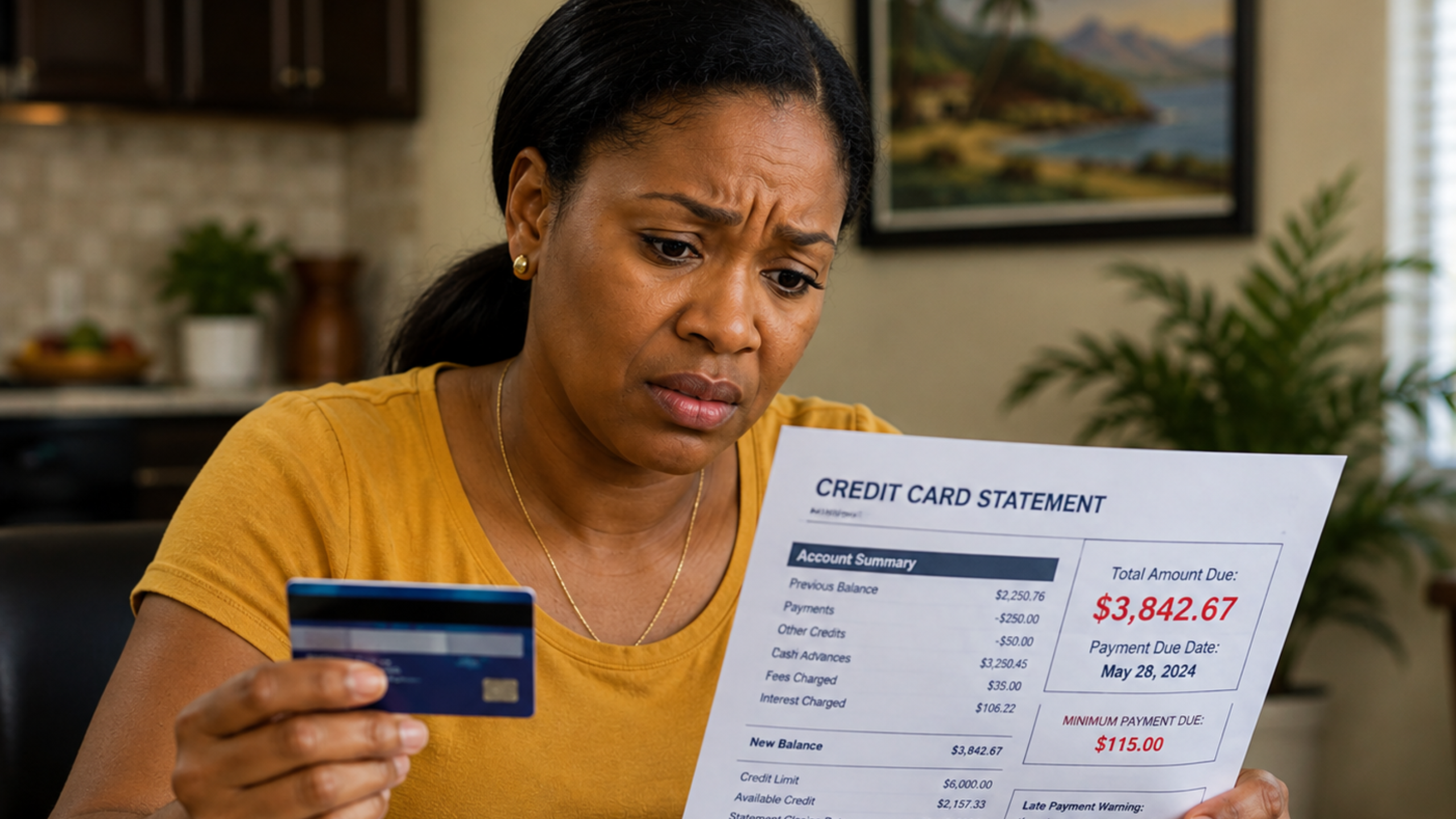

Jamaica’s credit-card balances reached a record J$94 billion in April 2026, more than double the J$40.2 billion recorded in 2017. With 435,883 credit cards in circulation at the end of 2025, credit has become a much bigger part of household finances.
The real concern is the cost. Credit-card interest rates can reach roughly 35% to 40% annually. As groceries, transportation, utilities, insurance and other expenses rise, some Jamaicans may be turning to credit cards not for convenience, but to cover everyday living costs.
When Credit Becomes an Emergency Fund
Credit cards can be useful when balances are paid quickly. The danger begins when households repeatedly use them for groceries, bills and other recurring expenses. At high interest rates, a temporary cash shortage can quickly become long-term debt.
Inflation may explain some of the increase in balances, but it can also make repayment harder. If household expenses rise faster than income, families may borrow more while having less money available to reduce existing debt.
What Jamaicans Should Do
The most important number is not your credit limit—it is how much you can afford to repay. Cardholders carrying balances should know their interest rates, pay more than the minimum where possible and explore lower-cost alternatives to expensive revolving debt.
Banks also have a role. Rising balances, repeated minimum payments and high credit utilisation can be warning signs of financial pressure. Responsible lending should include affordability checks and appropriate support before borrowers reach default.
The Bottom Line
A record J$94 billion in credit-card balances does not automatically mean Jamaica has a consumer-debt crisis, but it is a warning worth watching.