

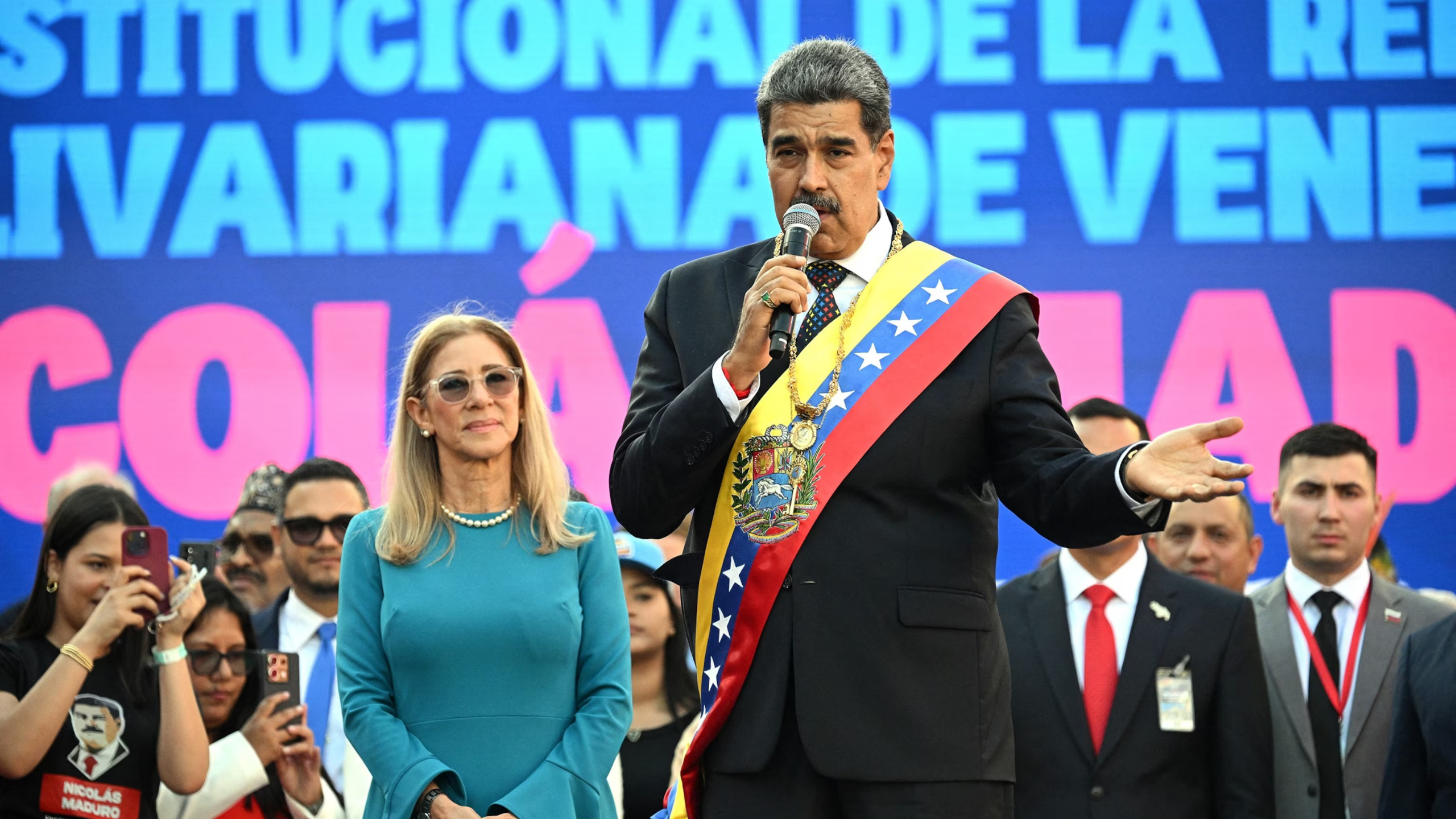

Former Venezuelan president Nicolás Maduro appeared in a New York federal court after being captured by U.S. authorities, pleading not guilty to charges that include narco-terrorism, drug trafficking, and money laundering.
While Maduro was escorted through Manhattan under heavy security, Venezuela moved quickly at home. Delcy Rodríguez, the country’s former vice president, was sworn in as acting leader in Caracas, with diplomats from China, Russia, and Iran among the first to show support.
This moment matters far beyond politics. Venezuela holds some of the world’s largest oil reserves, and any shake-up in leadership instantly raises questions about who controls that oil and how it reaches global markets. When uncertainty surrounds a major energy producer, markets pay attention.
For everyday people, the money impact shows up in familiar places. Political instability in oil-rich countries tends to keep oil prices volatile. That volatility often feeds directly into higher fuel, electricity, and transportation costs, expenses households feel quickly. Investors also tend to step back from emerging markets during uncertain transitions, which can pressure currencies, bonds, and regional stock markets tied to Latin America.
There’s also a bigger global signal. The rapid backing of Venezuela’s new acting leader by China, Russia, and Iran suggests the country could become an even larger geopolitical battleground. When major powers are involved, market uncertainty usually lasts longer, not shorter and prolonged uncertainty often keeps inflation pressures alive.
The bottom line: Maduro’s court appearance isn’t just a dramatic headline. It’s a reminder that political shocks in resource-heavy countries can ripple into oil prices, inflation, and market stability — quietly affecting household budgets and investor confidence worldwide.