

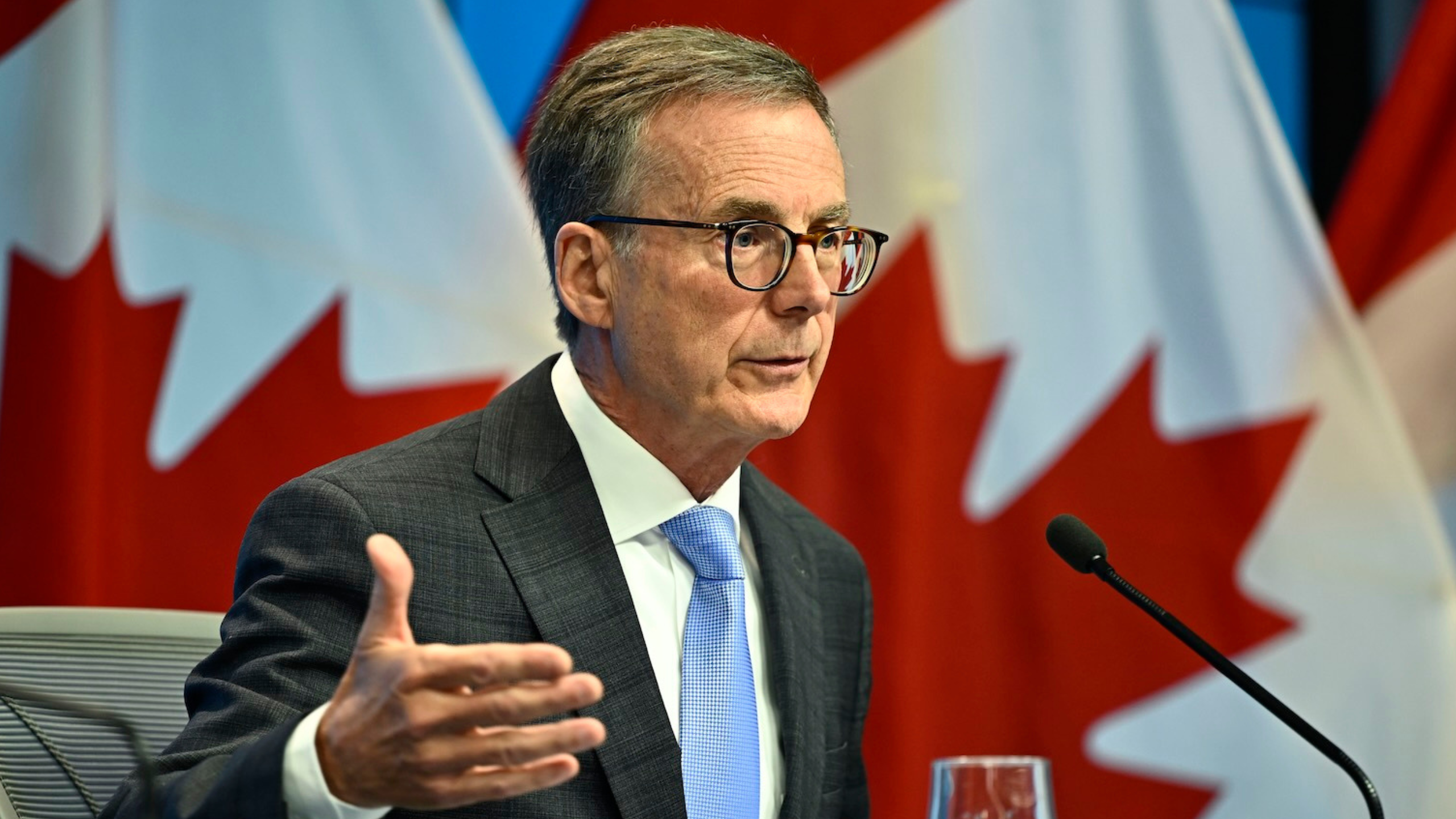

The Bank of Canada has decided to hold its key interest rate at 2.25%, keeping borrowing costs unchanged for Canadians, at least for now.
On the surface, the message sounds calm. The Bank says the economic outlook hasn’t shifted much since the fall. But beneath that calm is a clear warning: risks are rising, and trade with the United States is now the biggest concern.
Governor Tiff Macklem pointed directly to the upcoming review of the Canada–U.S.–Mexico trade agreement (CUSMA), calling it an “important risk” to Canada’s economic future. His message was blunt, the era of easy, predictable trade with the U.S. is likely over, and Canada needs to adjust.
For everyday Canadians, this rate hold brings short-term stability. Mortgage rates, lines of credit, and business loans stay where they are. There’s no immediate shock to household budgets, which is welcome news after years of rate volatility.
But the bigger story is what comes next.
Economic growth is expected to remain slow, with GDP projected to grow just 1.1% in 2026. Unemployment is still elevated, hiring plans are weak, and many businesses are delaying major investments because they don’t know what trade rules will look like later this year.
Inflation, however, is expected to stay close to the Bank’s 2% target, meaning prices should rise more slowly but don’t expect dramatic relief at the grocery store either.
Most economists now believe that if interest rates move at all in 2026, a cut is more likely than a hike, especially if trade tensions worsen or job growth stalls. In other words, the Bank is watching for economic weakness, not overheating.
The takeaway is simple:
Rates are steady, but confidence is fragile. Canada is entering a slower, more uncertain phase where global politics, not just inflation, will play a bigger role in shaping jobs, incomes, and household finances.