

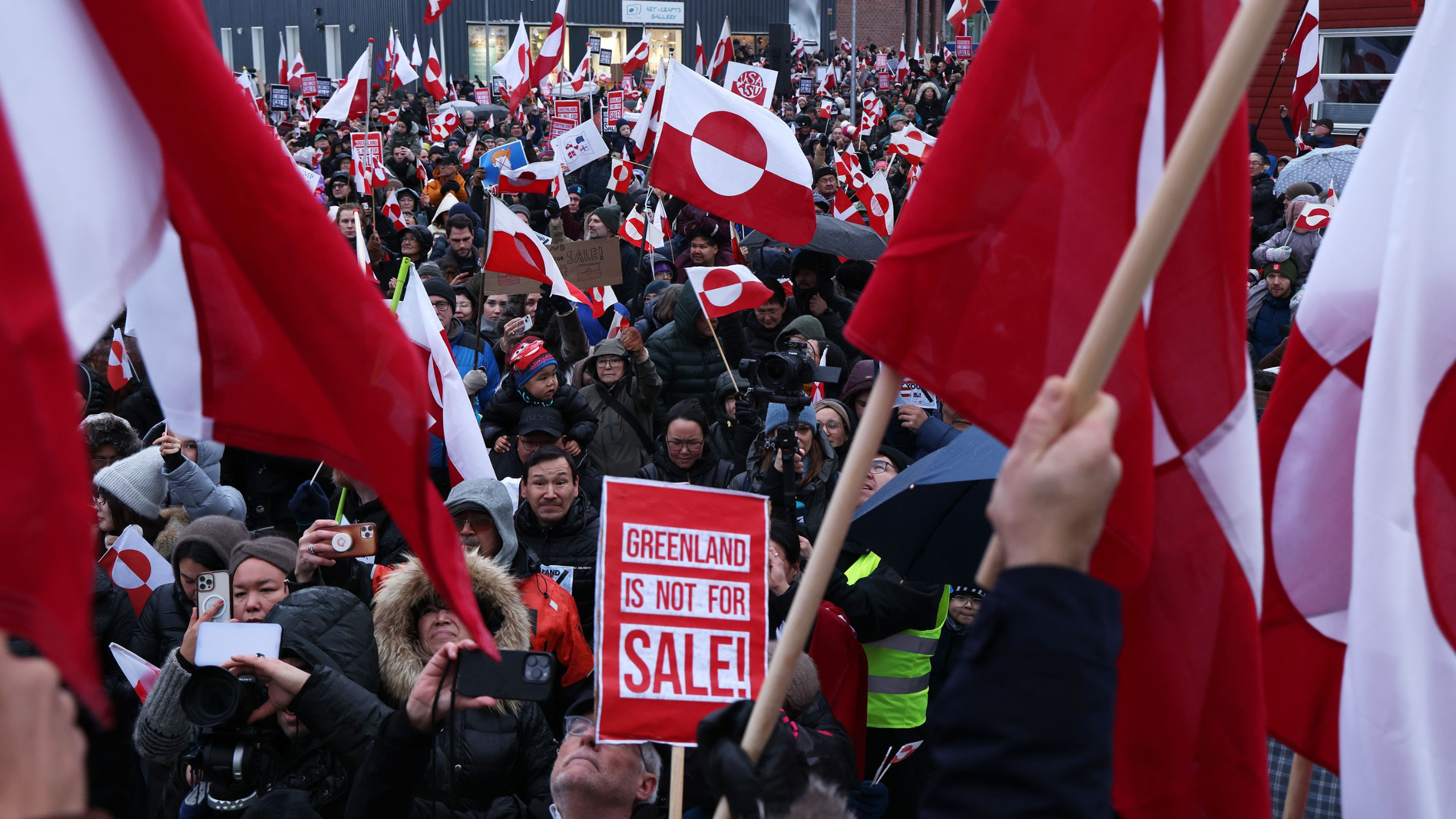

U.S. President Donald Trump has opened a new front in global trade tensions, this time over Greenland. Trump says the U.S. will impose new tariffs on Denmark and seven other European nations unless a deal is reached to allow America to purchase the territory.
The tariffs would begin at 10% and rise sharply to 25% by June 1 if no agreement is reached. The countries named are Germany, France, the UK, Sweden, Norway, Finland, and the Netherlands — are not rivals, but long-standing allies and key trading partners.
On the surface, this looks like another trade dispute. Underneath, it’s something bigger.
These tariffs are part of a broader U.S. strategy to assert global dominance in an increasingly competitive world. Control of Greenland matters because of its strategic location in the Arctic, its military value, and its access to critical natural resources as ice melts and new shipping routes open. With China and Russia expanding their influence in the region, tariffs are being used not just as an economic tool, but as leverage in a global power contest.
For everyday people, however, the geopolitical chessboard quickly turns into a cost-of-living issue.
Tariffs act like a quiet tax on imports, and businesses rarely absorb those costs. They pass them on. Higher tariffs on Europe could mean increased prices on pharmaceuticals, vehicles, aircraft parts, machinery, and consumer goods that quietly flow into daily life. In short, shoppers and households pay the price.
The timing is especially sensitive. Many families are already managing high living costs, stretched budgets, and lingering inflation. Adding new trade barriers risks pushing prices higher just as people are trying to regain financial stability.
There’s also the market impact. Europe is the U.S.’s largest trading partner, and escalating trade threats create uncertainty for businesses and investors. Markets tend to react poorly to uncertainty, which can lead to volatility, disrupted supply chains, and slower economic growth. European leaders have warned that these moves could damage decades-old alliances, including cooperation within NATO.
The takeaway is simple. This isn’t just political posturing or distant diplomacy. Tariffs tied to global power struggles have real consequences — higher prices, shakier stock markets, and more pressure on household finances. Global dominance may be the goal, but everyday people are the ones who feel the cost. As always, stay ready and use crises as opportunities.