

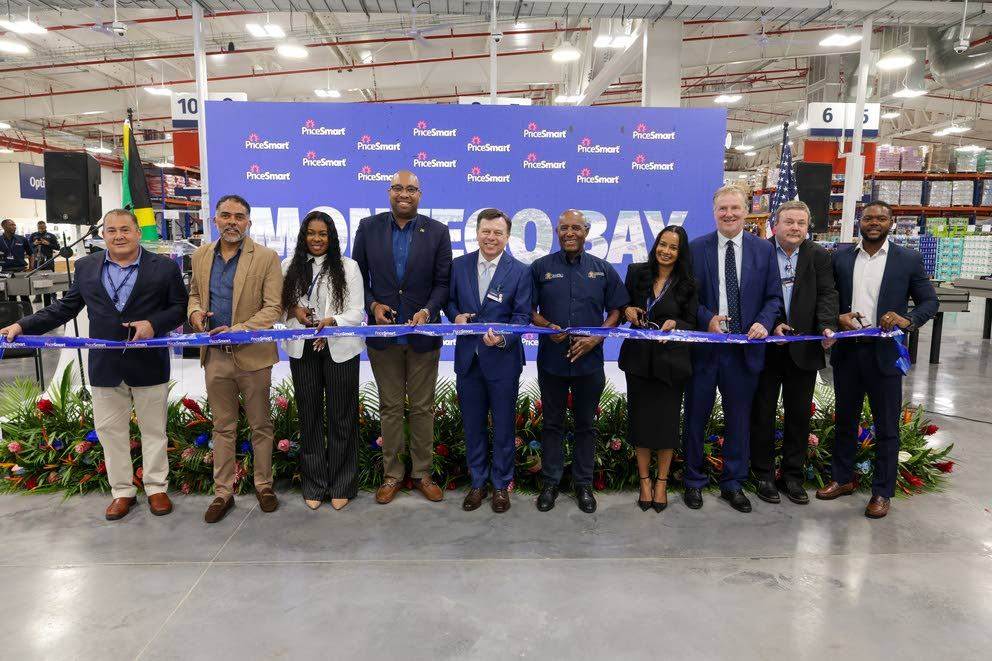

PriceSmart is preparing to open a fourth Jamaican warehouse club on South Camp Road in Kingston in December. It would be the company’s second club in the capital and its 60th overall. For shoppers, the opening presents a deceptively simple question: when does buying more actually cost less? For investors, there is another question: how many members must shop regularly to make a new warehouse pay?
The Kingston plan follows the opening of a third Jamaican club in Montego Bay in October. Once South Camp Road opens, Jamaica will have as many clubs as Trinidad and Tobago. The Dominican Republic has six. Those numbers show how a US-listed retailer has built a regional business one market at a time. They also show why store count is only the beginning of the analysis.
The savings are in the maths, not the size of the trolley
Warehouse clubs are built around selling large quantities to paying members. A family may get a better price per roll of toilet paper or per kilogram of rice. But that lower unit price has to cover the membership cost and any extra expense of getting to the store. A bargain that spoils, sits unused or gets bought on expensive credit can quickly lose its advantage.
Imagine a household saves J$600 on a basket of products it would have bought anyway, after comparing the same quantities at two shops. If the trip costs an extra J$250 in transport, the net saving is J$350 before membership costs. The saving counts only if the family uses the items and avoids turning the trip into extra spending. The figures are illustrative; the principle applies whether the shopper is in Kingston, Portmore or Montego Bay.
A useful comparison starts with a short list of things the household reliably consumes. Measure the price per litre, kilogram or item, then look at the cash needed at checkout. A large pack can be cheaper over a month while still taking more money out of this week’s budget. For families with irregular income, that timing can matter as much as the discount.
A new store has to earn back its cost
For the business, an additional outlet can bring new members and make shopping more convenient for existing ones. It also adds costs. A warehouse needs staff, utilities, stock and distribution capacity long before anyone knows what a normal year of sales will look like. The opening crowd is an early sign of interest; repeat visits and renewals are better clues to lasting demand.
PriceSmart reported about US$5.88 billion in revenue and US$100.8 million in membership income for the financial year ended August 31, 2026. These are companywide figures. They are useful for understanding the scale of the model, but they do not reveal whether a particular Jamaican store will generate an attractive return. A retailer can open a busy club while shifting some purchases away from a nearby location it already owns. What matters is how much business the new site adds across the network.
Beginners following the Nasdaq-listed company can look beyond the ribbon cutting. Compare sales at established clubs, membership growth and operating profit. Then look at how much cash the company spends on property, equipment and stocking new outlets. Expanding sales and expanding profits can go together, but opening costs, exchange rates or competition can pull them apart.
What it means for small businesses and diaspora families
A small restaurant or shop may be able to buy supplies at a lower unit cost. The trade-off is cash tied up in inventory. If a business buys three months of supplies while collecting customer payments slowly, the bulk purchase may leave less money for wages or rent. The best comparison includes how quickly the stock will move, how reliably it can be replenished and what it costs to store.
For diaspora families helping relatives with groceries, a nearby store could simplify a regular shopping trip. The best measure is still what the household gets from the money it spends, including membership and transport. The retailer’s growth is a separate question for anyone who owns, or is considering, its US-dollar shares.
The first milestone is the actual opening. After that, the useful evidence will be what shoppers save on the goods they regularly buy and what the company earns on the capital it has committed. Both groups are testing the same idea: buying more only works when the extra spending pays for itself.